
Self-compacting concrete
- Home
- Drymix mortar industry
- Concrete Products
- Self-compacting concrete
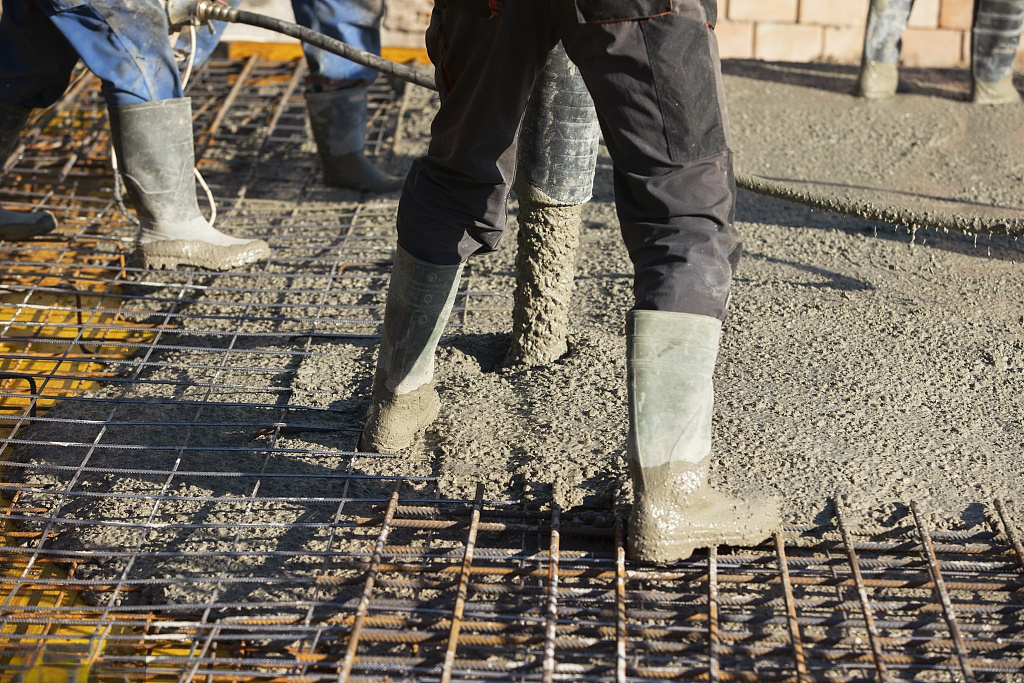
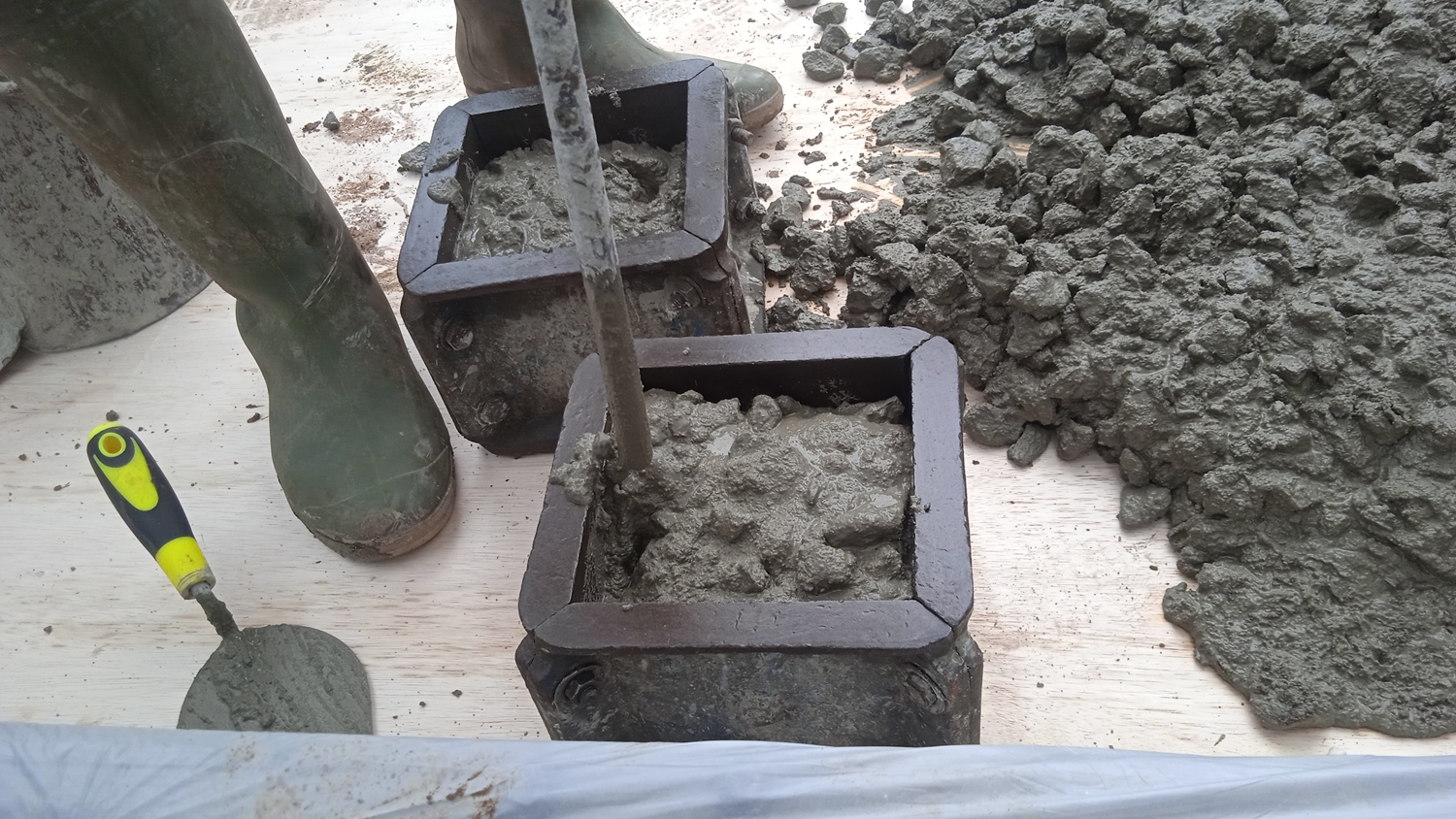
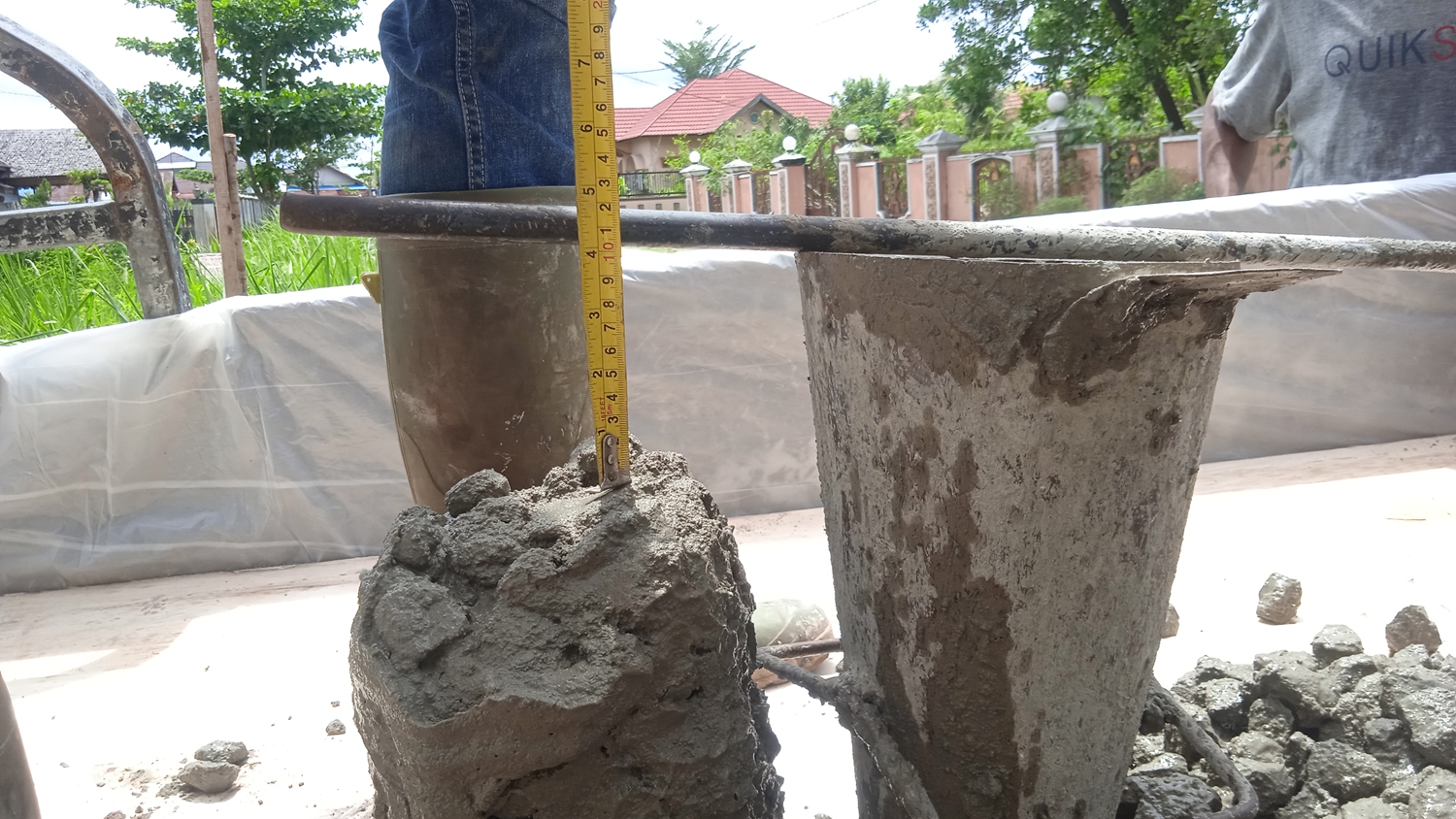
Self-compacting concrete (SCC) is a special type of concrete characterized by high flowing properties and excellent resistance to segregation. It requires no vibration during placement; relying solely on its own weight, it flows to fill every corner of the formwork, fills the gaps between reinforcing bars, and expels air.
Core Characteristics
The performance of SCC is defined by three key indicators:
- Filling Ability: The ability to flow through and fill every corner of the formwork under its own weight.
- Passing Ability: The ability to flow through obstacles such as densely spaced reinforcing bars without causing blockages or aggregate segregation.
- Segregation Resistance: The ability to maintain uniformity and prevent component separation during transportation and placement.
Key Advantages
- Construction Efficiency: Eliminates the need for vibration, significantly shortening pouring time and reducing labor costs.
- Reliable Quality: Resolves issues such as honeycombing and pitting caused by insufficient or excessive vibration, ensuring structural density.
- Environmentally Friendly: Eliminates vibration noise at the construction site, improving the working environment.
- Design Flexibility: Suitable for structural members with complex shapes and extremely dense reinforcement.
Recommended additives
- Polycarboxylate superplasticizer
- Viscosity modifying agents
- Mineral Admixtures
- Air-Entraining & Defoaming Agents
Given the specific requirements of self-compacting concrete (SCC), traditional water-reducing agents (such as lignosulfonates or naphthalene-based water-reducing agents) often fall short. The solution for SCC is polycarboxylate superplasticizers.
Core Functions and Characteristics:
1. Core Chemical Principle: “Comb-like” Molecular Structure
Unlike traditional water-reducing agents, which rely on electrostatic repulsion, polycarboxylate superplasticizers feature a comb-like structure with long side chains.
- Steric Hindrance: The long side chains form a physical barrier between cement particles, preventing them from aggregating into clumps.
- High Dispersibility: Even at extremely low water-to-cement ratios (typically), it still imparts exceptional flowing properties to the concrete.
2. Key Performance Characteristics of SCC-Specific Superplasticizers
To meet the requirements of SCC for filling capacity and segregation resistance, specialized superplasticizers are typically formulated through a unique blend:
- Extremely High Water-Reduction Rate: Typically reaching 25%–40% or higher, ensuring high strength while reducing viscosity.
- Excellent slump retention: Since SCC placement is typically slow, specialized water-reducing agents provide low slump loss over 1–2 hours, ensuring performance does not degrade during transport from the batching plant to the job site.
- Foam Control: Since SCC cannot be vibrated, specialized superplasticizers contain trace amounts of defoamers that effectively eliminate large air bubbles entrapped during mixing, thereby improving the concrete’s visual quality.
- Viscosity Modulation: High-end SCC superplasticizers incorporate viscosity-modifying additives (VMA) to prevent aggregate settlement or bleeding under conditions of high flowingness.
3. Recommendations for Use
- Extremely High Sensitivity: SCC superplasticizers are extremely sensitive to water content; even minor adjustments (as little as 1–2 kg/m³) can cause the concrete to transition from a “jelly-like” state to “water-aggregate separation.”
- Compatibility Testing: Compatibility testing must be conducted for specific cements, fly ash, and fine aggregates to prevent abnormal setting or excessive slump loss.
In self-compacting concrete (SCC), the core function of viscosity modifying agents (VMA) is to resolve the conflict between “high flowability” and “segregation resistance.” It acts like a “glue,” allowing the concrete to flow like water while tightly binding the aggregates and water together.
Why is VMA essential for SCC?
Without a VMA, highly flowing concrete is highly prone to the following issues:
- Segregation: Aggregates settle at the bottom while the paste floats on top.
- Bleeding: Water separates and rises to the surface, leading to a porous structure and the formation of cracks.
- Blocking: When flowing through densely spaced reinforcing bars, the paste escapes while the aggregates get trapped in the gaps between the bars.
In self-compacting concrete (SCC), mineral admixturesare not merely fillers used to substitute cement and reduce costs, but also a key means of regulatingrheological properties. Since SCC requires an extremely high slurry volume (typically 340–400 L/m³), relying solely on cement would result in excessive hydration heat and shrinkage cracks; therefore, the extensive use of admixtures is essential.
Below are the most commonly used mineral admixtures in SCC and their core functions:
1. Fly Ash — “Lubricant”
- Morphological Effect: Fly ash particles are microscopically spherical (ball-bearing effect), which significantly reduces slurry viscosity and enhances flowing properties.
- Water-Reducing Effect: Reduces water content while maintaining the same flowability.
- Late-Age Strength: Facilitates secondary hydration reactions, enhancing late-age strength and improving durability.
- Recommendation: Class I Fly Ash is preferred, as it offers the best water-reducing effect and water demand performance.
2. Granulated Granulated Blast Furnace Slag (GGBS) —— “Strengthening Agent”
- Improved Cohesion: Compared to fly ash, GGBS makes the paste more viscous and uniform, helping to prevent segregation.
- Filling Effect: With finer particles, it fills gaps in the cement matrix, improving density.
- Construction Benefits: Significantly improves the surface finish of concrete.
3. Limestone Powder — “Volume Filler”
- Inert Filler: When cement and active admixtures are insufficient, limestone powder provides the necessary total powder volume to maintain the slurry’s volume.
- Improved Rheology: An appropriate amount of limestone powder can reduce the yield stress of SCC, making it easier to flow through the gaps between reinforcing bars.
- Cost-Effectiveness: In regions where fly ash is scarce, limestone powder serves as a low-cost substitute.
4. Silica Fume —— “The Ultimate Solution for Segregation”
- Ultrafine Particles: With a very high specific surface area, they generate extremely strong cohesive forces.
- Function: Specifically used for formulating high-strength SCC or resolving severe segregation issues.
Note: It significantly increases pumping pressure and water demand; the dosage is typically controlled at 5%–10% and must be used in conjunction with high-performance superplasticizers.
In self-compacting concrete (SCC), air-entraining agents (AEA) and defoamers form a “contradictory pair.” Together, they control the microstructure of air bubbles within the concrete, directly affecting surface quality and frost resistance and durability.
1. Defoamer — The “Face” of the Mix
Because SCC uses large amounts of polycarboxylic superplasticizers (PCE) and viscosifiers, it is highly prone to incorporating a large number of irregular large air bubbles (diameter >1 mm) during mixing.
- Core Function: Eliminate harmful large bubbles. If these large bubbles remain near the formwork edges, they will cause typical “honeycomb” or “pitting” defects after formwork removal.
- Improve Density: Reduce internal voids to prevent water and chloride ion penetration.
- Common Types: Polyether-based, silicone-based, or non-ionic surfactants.
2. Air-Entraining Agents — The “Anti-Freeze” Solution
In cold regions (such as winter construction in northern areas), SCC must possess freeze-thaw resistance.
- Core Function: Introduce a large number of extremely small (20–200 μm), uniformly distributed stable microbubbles.
- Anti-Freeze Principle: These microbubbles act like “cushioning airbags,” absorbing the expansion pressure caused by water freezing.
- Rheological Enhancement: The microbubbles act as “ball bearings,” significantly improving SCC’s flowing properties without increasing water content.
3. Why does SCC often require “de-foaming before air-entraining”?
This is an advanced technique in SCC mix design:
De-foaming: Utilize defoamers—either those inherent in superplasticizers or added separately—to eliminate all harmful large air bubbles (which affect appearance and strength) generated during mixing.
Air-entraining: Based on freeze-thaw resistance requirements, a specialized air-entraining agent is precisely added to create a uniform distribution of microbubbles.
Result: This ensures a mirror-smooth surface after formwork removal (free of large bubbles) while guaranteeing the structure’s durability in severe cold (due to the presence of microbubbles).
FAQ
- 1Applications of Self-Compacting Concrete?
The core value of self-compacting concrete (SCC) lies in “vibration-free placement”. This characteristic has not only transformed construction methods but also opened up applications that ordinary concrete cannot handle.
Core Application Scenarios
*Structures with Extremely Dense Reinforcement
- Examples: Transfer beams in super-high-rise buildings, nuclear power plant shells, and complex bridge joints.
- Reason: The gaps between reinforcing bars are too small for traditional vibrators to penetrate. Thanks to its excellent passability, SCC can flow through dense reinforcement like water, filling every void.
*Complex-Shaped or Thin-Walled Components
- Examples: Unconventionally shaped building envelopes, ultra-thin decorative walls, tunnel linings.
- Reason: Complex formwork contains numerous hard-to-reach areas. SCC relies on self-compaction to precisely replicate the formwork’s contours, ensuring structural integrity.
*Large-Volume and Underground Projects
- Examples: Foundation slabs for high-rise buildings, dams, underground diaphragm walls.
- Reason: During large-volume pours, manual compaction cannot guarantee full compaction at every point. SCC maintains high homogeneity, reducing internal defects.
*Precast Production
- Examples: Precast utility tunnels, shield tunnel segments, stair components.
- Reason: Automated production lines no longer require noisy vibrating tables, resulting in higher production efficiency and surface smoothness comparable to “fair-faced concrete.”
- 2Advantages of Self-Compacting Concrete
Advantages of Self-Compacting Concrete
- Improved Efficiency and Labor Savings:
- By eliminating the vibration process, pouring speed is more than 50% faster than that of conventional concrete.
- This reduces on-site labor requirements and lowers labor costs.
- Enhanced Quality and Guaranteed Strength:
- It completely resolves the issues of honeycombing, pitting, and internal voids caused by insufficient or excessive vibration.
- Due to its high powder content, the hardened structure is extremely dense, and its water resistance and durability are typically superior to those of conventional concrete.
- Reduced Noise, Environmentally Friendly:
- It completely eliminates the loud noise generated by vibrating pumps, making it ideal for nighttime construction in urban areas or projects near hospitals.
- Superior Appearance, Enhanced Aesthetics:
- The surface is smooth as a mirror after formwork removal, reducing the workload for subsequent plastering and repairs, and is commonly used in fair-faced concrete projects.
- Improved Efficiency and Labor Savings: