
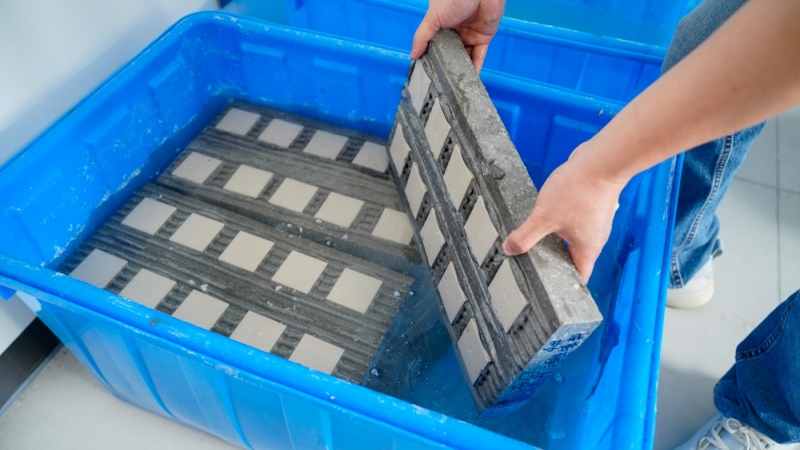
Tile Adhesive

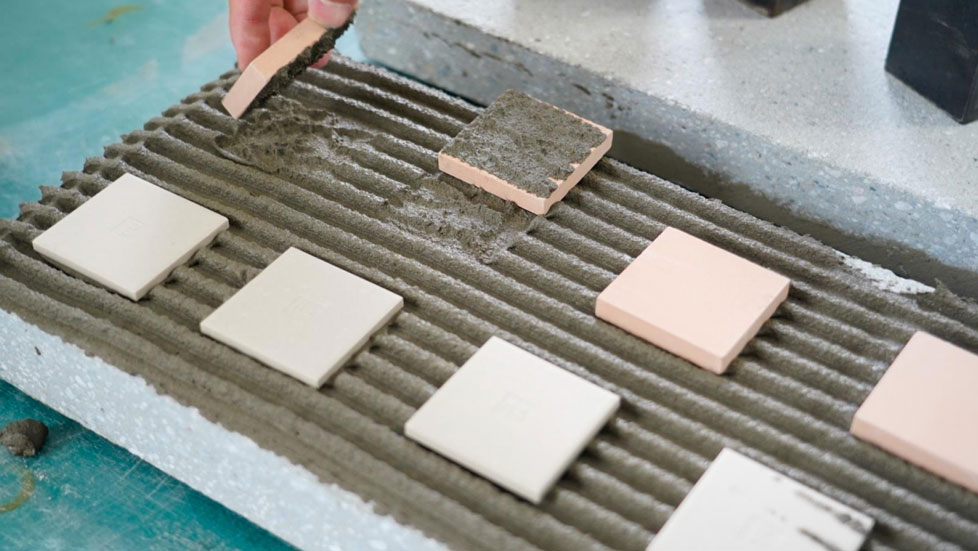
Tile adhesive (CTA) is a specially formulated bonding material used to fix tiles to walls and floors. It is typically made from a mixture of cement, polymers, graded fillers and special additives, which enhance its workability, adhesive strength and water retention performance. Compared to traditional sand-cement mixtures, CTA offers superior bonding properties, enabling tiles to be laid more effectively on a variety of substrates, including concrete and interior and exterior walls.
It is particularly important to select the appropriate grade of tile adhesive based on the specific tiles, substrate and installation conditions. According to the EN 12004 standard, tile adhesives are classified as C1/C2 for bond strength, S1/S2 for flexibility, T for sag resistance, E for extended open time and F for rapid setting. To meet the various performance requirements of tile adhesives, a range of additives is required; the VitaPlus series of mortar additives can meet the performance requirements of all types of tile adhesives.

Key Performance Characteristics of Tile Adhesive
  • Adhesive Strength
  • Open Time
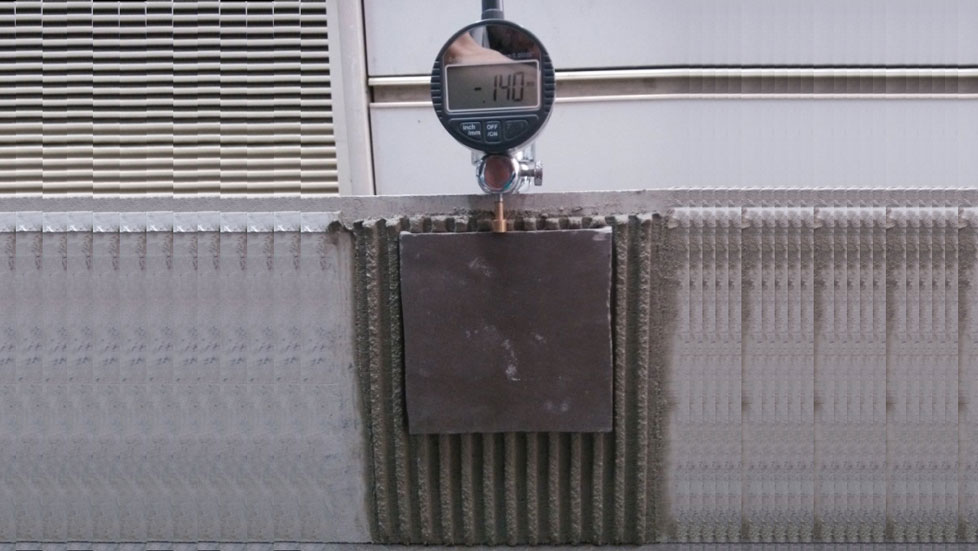
  • Slip Resistance
  • Deformability/Flexibility
  • Workability

Recommended additives

  • MHEC/HPMC
  • Redispersible polymer powder
  • Starch ether
  • Calcium formate
MHEC/HPMC

In the formulation of tile adhesive, HPMC/MHEC is an indispensable core additive. It provides excellent water retention, prevents moisture loss, ensures thorough hydration of the cement, and prevents tiles from becoming hollow or detaching. This superior water retention performance also extends the tile adhesive’s “open time” and prevents surface skinning: enhancing application flexibility: allowing workers sufficient time (typically 20–30 minutes) after applying the adhesive over a large area to lay the tiles and make minor adjustments to their position, ensuring that every tile makes full contact with the adhesive bed.

Recommended models:

MP-15M02

ME-H14N02

ME-H14N20

ME-H12N12

Redispersible polymer powder

In tile adhesives, dispersible polymer powder plays a crucial role. By forming a tough polymer film within the dry-mix mortar, it fundamentally alters the physical properties of the mortar, namely by imparting a degree of flexibility to the cement.

Core Functions:

  • Significantly enhances bond strength: During the hardening process of the mortar, the Redispersible Polymer Powder forms a network-like film that firmly grips the surface of the tiles (particularly vitrified tiles with low water absorption) and the substrate, preventing the tiles from falling off.
  • Enhances flexibility and resistance to deformation: Due to the elasticity of the polymer, it absorbs internal stresses caused by temperature differences and drying shrinkage, giving the tile adhesive better deformation capacity and preventing tile cracking or hollow spots.
  • Improved application performance: Extends the open time of the tile adhesive, giving workers more time to make adjustments during installation.
  • Enhanced water resistance and freeze-thaw resistance: The polymer film seals the pores within the mortar, reducing water penetration and extending its service life in damp environments or cold regions.

Recommended models:
RDP-7028
RDP-7053
RDP-66143
RDP-7035H
RDP-86353

Starch ether

Starch ether is primarily used in conjunction with cellulose ether to optimise the workability of mortar, particularly to address the issue of sagging when laying large tiles.

Key functions

  • Excellent anti-sagging properties: This is the core function of starch ether. It imparts excellent thixotropy to the mortar, preventing tiles from slipping due to their own weight when laid thickly or when using large-format tiles.
  • Improved application feel: Increases the lubricity of the mortar, making application smoother and preventing the trowel from sticking, thereby enhancing the worker’s efficiency.
  • Auxiliary thickening: Significantly increases the viscosity of the mortar even at low dosages, giving the mortar a fuller appearance.

Recommended models:
SE-301
SE-302

Calcium formate

In tile adhesive formulations, calcium formate is referred to as an “earlyaccelerator”. It plays a key role particularly in low-temperature application conditions, ensuring that the tile adhesive hardens rapidly and develops strength. Its inclusion in tile adhesives improves water resistance, thereby reducing the amount of other additives required and lowering production costs.

Core Functions

  • Accelerates Cement Hardening: Calcium formate significantly accelerates the hydration rate of tricalcium silicate (C3S) in cement, shortening both initial and final setting times.
  • Significantly Enhances Early Strength: Particularly during winter or low-temperature (5°C–15°C) construction, it enables the tile adhesive to rapidly achieve sufficient strength within 24 hours to support subsequent processes (such as grouting).
  • No adverse effects on long-term strength: Unlike traditional calcium chloride accelerators, calcium formate does not cause reinforcement corrosion and has virtually no negative impact on the final strength of cementitious products.
  • Improved construction workflow: In situations where time is of the essence or in low-temperature environments, it prevents tile displacement or slippage caused by the tile adhesive drying too slowly.

Recommended models:
CaFo-SG98

FAQ

  1. 1
    What viscosity of cellulose ether should be selected for tile adhesives?

    In tile adhesives, the choice of cellulose ether (HPMC/HEMC) viscosity directly affects water retention and workability.

    For different applications, the recommended mainstream choices are as follows:

    1. Mainstream choice: Medium to low viscosity (40,000–60,000 mPa·s)

    This is currently the most common viscosity range in the tile adhesive market.

    • Advantages: Stable water retention performance, and the best rheological properties (smoothness) of the slurry. It feels light and smooth when applied by workers, does not stick to the trowel, and the slurry wets the back of the tiles more easily.
    • Suitable Applications: Standard tile adhesives (Class C1), indoor thin-bed application.

    2. For large tiles: Low viscosity (20,000–30,000 mPa·s)

    • Advantages: Possesses stronger thickening capacity, providing better support.
    • Suitable scenarios: Installation of large-format tiles, heavy-duty stone, or wall applications requiring high resistance to sagging.

    3. Special requirements: High viscosity (150,000–200,000 mPa·s)

    • Disadvantages: Although it offers excellent water retention performance, it causes the mortar to become too sticky, making it cumbersome for workers to handle and prone to trapping air bubbles during mixing.
    • Suitable scenarios: Used in extremely rare cases where water retention is critical in ultra-high-temperature environments, or as a compromise when reducing formulation costs (using a higher viscosity to reduce the amount required, though performance will be compromised).

    💡 Key Recommendations:

    • Do not blindly pursue high viscosity: Higher viscosity does not necessarily equate to stronger bonding strength. In fact, excessively high viscosity reduces the tile adhesive’s wetting ability on the back of the tile, which may actually lead to detachment.
    • Viscosity is not the only indicator: In addition to viscosity, greater attention should be paid to the cellulose ether’s water retention and open time.
    • Combining with Starch Ether: If you find that tile adhesive with a viscosity of 40,000–60,000 is slipping slightly when laying large tiles, the best solution is to add a small amount of starch ether to improve sag resistance, rather than simply switching to a cellulose ether with a higher viscosity.
  2. 2
    How can tile adhesive improve its water resistance?

    To improve the water resistance (i.e. tensile bond strength after immersion) of tile adhesive, the key lies in enhancingthe density at the interfaceandthe polymer’s resistance to hydrolysis.

    Technical approaches:

    1. Select high-quality Redispersible Polymer Powder (RDP)

    Redispersible polymer powder is the key to providing water resistance.

    • RDP with good water resistance: Not all redispersible polymer powders are water-resistant. One should select vinyl acetate-ethylene copolymer (VAE) grades that possess good alkali and water resistance (such as VitaPlus RDP86353).
    • Increasing the dosage: Water resistance strength is typically lower than strength at room temperature. If the water-immersed strength fails to meet standards (e.g. 0.5 MPa for Class C1, 1.0 MPa for Class C2), the most direct solution is to increase the polymer powder dosage to 2%–3.5% or higher.

    2. Introduction of active mineral admixtures

    Blocking water pathways through chemical reactions.

    • Silica fume: Silica fume particles are extremely fine, capable of filling the micro-pores between cement particles and undergoing a secondary hydration reaction (pozzolanic reaction), significantly improving the bond strength between cellulose ethers and polymer films and the substrate, and substantially enhancing water resistance. Recommended dosage: 2%–5%.
    • Kaolin or Ground Granulated Blast-furnace Slag: These also serve to optimise the gradation and enhance density.

    3. Addition of water-repellent agents (optional)

    • Silane powder: Adding a small amount (0.1%–0.3%) of water-repellent powder to the formulation can reduce the mortar’s water absorption rate, making it difficult for water to penetrate the bonding interface, thereby indirectly protecting water resistance.
  3. 3
    Incorrect use of tile adhesive
    1. Adding cement or sand to the tile adhesive
      • Consequences: This completely disrupts the manufacturer’s pre-mixed polymer ratio, leading to a drastic reduction in water retention and a loss of bonding strength.
    2. Tiles that have been soaked in water
      • Consequences: Tile adhesive is specifically designed for dry-laying applications. If the tiles have been soaked in water, the moisture on the back will dilute the adhesive paste at the contact surface, actually causing poor adhesion or slippage.
    3. Inadequate mixing or adding water after the fact
      • Consequences: Forcing water into adhesive paste that has already begun to set and reusing it will break the chemical bonds, resulting in a loss of over 50% of the bonding strength.
  4. 4
    Standards for tile adhesive

    Tile adhesives in the European market are primarily governed by a very strict standardisation system, the core of which is EN 12004. This standard is not only widely used across Europe but also forms the basis of the international standard ISO 13007.

    Below is a detailed explanation of the European standards and classifications for tile adhesives:

    1. Core Standard: EN 12004

    This standard classifies tile adhesives into three main categories based on chemical composition:

    • C (Cementitious): Cement-based tile adhesive (the most common type on the market).
    • D (Dispersion): Paste-like emulsion type (primarily used for interior wooden panels or lightweight partition walls).
    • R (Reaction Resin): Reaction-type resin (such as epoxy resin adhesive, used in environments requiring extremely high strength or resistance to chemical corrosion).

    2. Performance Grade Classification (using Class C cementitious adhesives as an example)

    This is the most critical indicator of tile adhesive quality, typically represented by a combination of numbers + letters:

    Basic Performance Grades

    • C1: Standard cementitious tile adhesive. Tensile bond strength MPa.
    • C2: Enhanced cement-based tile adhesive. Tensile bond strength: MPa (including strength at room temperature, after water immersion, thermal ageing, and freeze-thaw cycles).

    Additional characteristic symbols

    • T (Thixotropic): Anti-sag type. Slip after tile installation: mm.
    • E (Extended open time): Extended open time type. Still meets strength requirements when tiles are laid after 30 minutes (compared to 20 minutes for standard types).
    • F (Fast setting): Fast-setting type. Typically achieves a certain strength within 6 hours.

    Flexibility/Lateral deformation class (EN 12002)

    For substrates subject to significant temperature fluctuations or slight vibrations, the EN standard introduces flexibility indicators:

    • S1: Flexible tile adhesive. Lateral deformation between 2.5mm – 5mm.
    • S2: Highly flexible tile adhesive. Lateral deformation ≥5mm.

    3. Examples of common classifications

    You will often see these designations on product packaging, indicating their performance grades:

    • C1T: Standard anti-sag tile adhesive (suitable for small tiles, indoor use).
    • C2TE: Enhanced, anti-sag, long open time (commonly used in high-end home renovations, suitable for polished porcelain tiles).
    • C2TES1: Enhanced, anti-sag, long open time and flexible (suitable for underfloor heating, wooden substrates, and large-format thin tiles).