

Ultra-High Performance Concrete
- Home
- Drymix mortar industry
- Concrete Products
- Ultra-High Performance Concrete
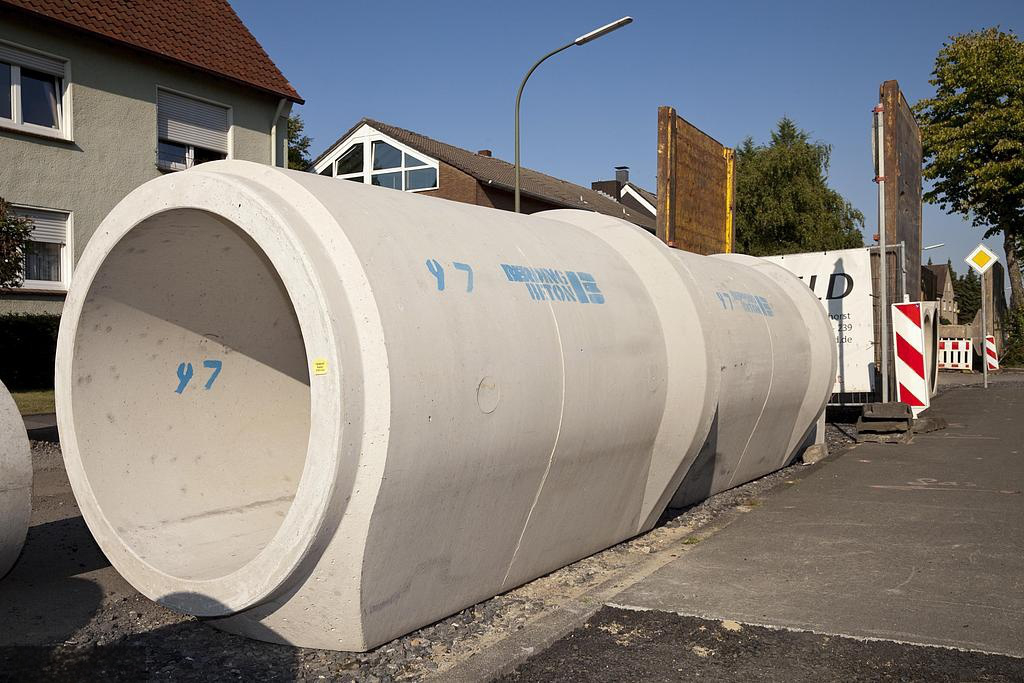
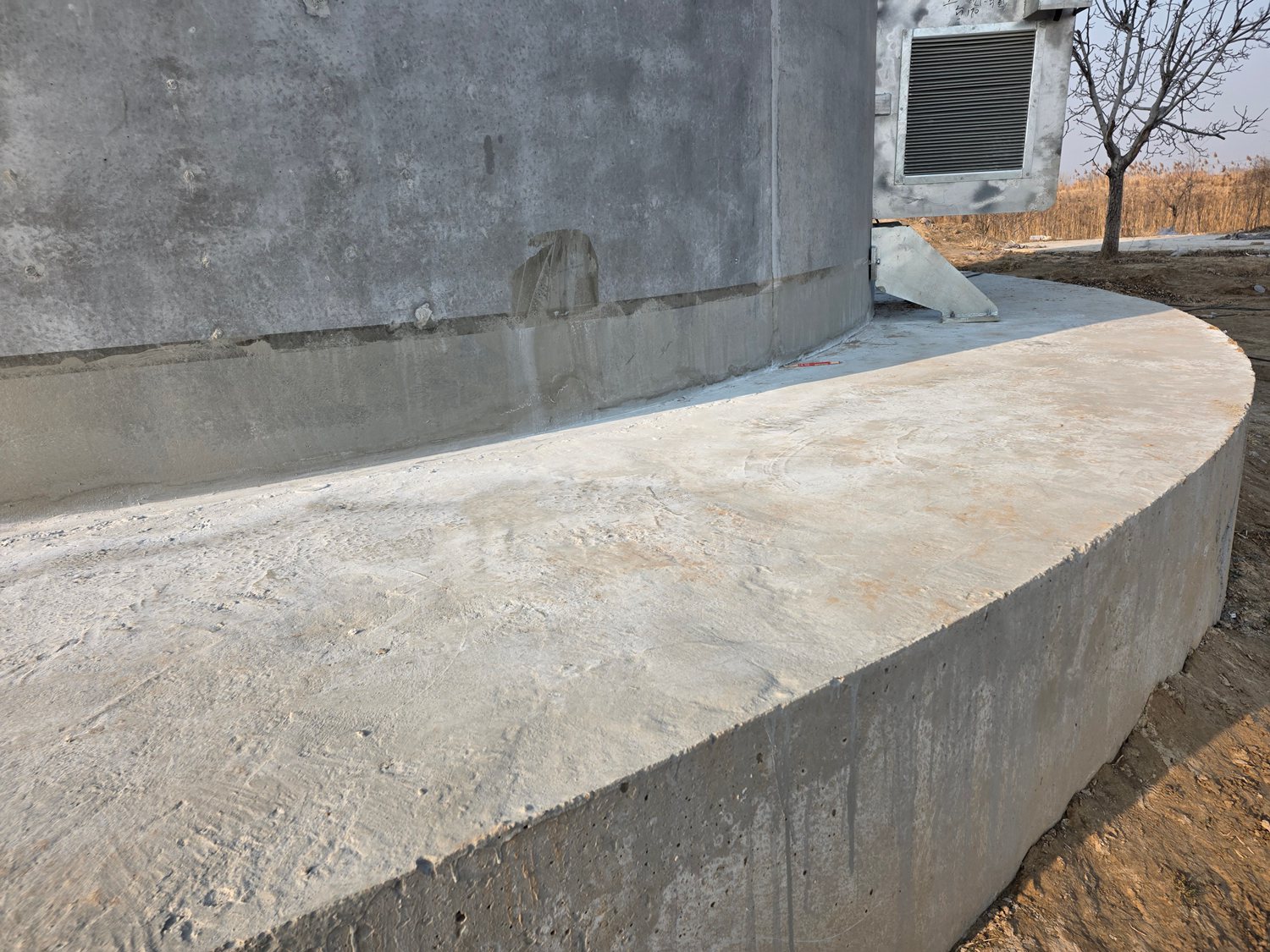
UHPC (Ultra-High Performance Concrete, ultra-high-performance concrete) is currently the ‘gold standard’ material in the concrete engineering sector, often referred to as the ‘teeth of industry’ or the ‘king of man-made stone’.
It completely overturns the traditional perception of concrete as ‘brittle and prone to cracking’, boasting ultra-high strength, ultra-high toughness and exceptional durability.
1. Core performance: Just how strong is it?
- Ultra-High Compressive Strength: Compressive strength typically ranges from 120 MPa to 200 MPa or higher (compared to just 30–50 MPa for standard ready-mixed concrete), with a maximum of up to 800 MPa.
- Exceptional Tensile Strength: Traditional concrete has virtually zero tensile strength, whereas UHPC incorporates a large amount of steel fibres, giving it significant ductility and resistance to bending and tensile forces; under load, it ‘cracks but does not break’.
- Superior Durability: Its internal structure is extremely dense, with virtually no capillaries. Water and chloride ions cannot penetrate it; its theoretical lifespan can reach 100–200 years, and it requires virtually no maintenance.
2. The “Cutting-Edge” Formula of UHPC
UHPC does not use coarse aggregates (gravel); its formulation is based on the principle of **“maximum packing density”**:
- Ultra-fine powders: High-grade cement, silica fume and ultra-fine quartz powder are used.
- Extremely low water-to-binder ratio: The water-to-cement ratio is typically between 0.15 and 0.2. Mixing is only possible with the aid of polycarboxylate superplasticisers with an ultra-high water-reduction rate.
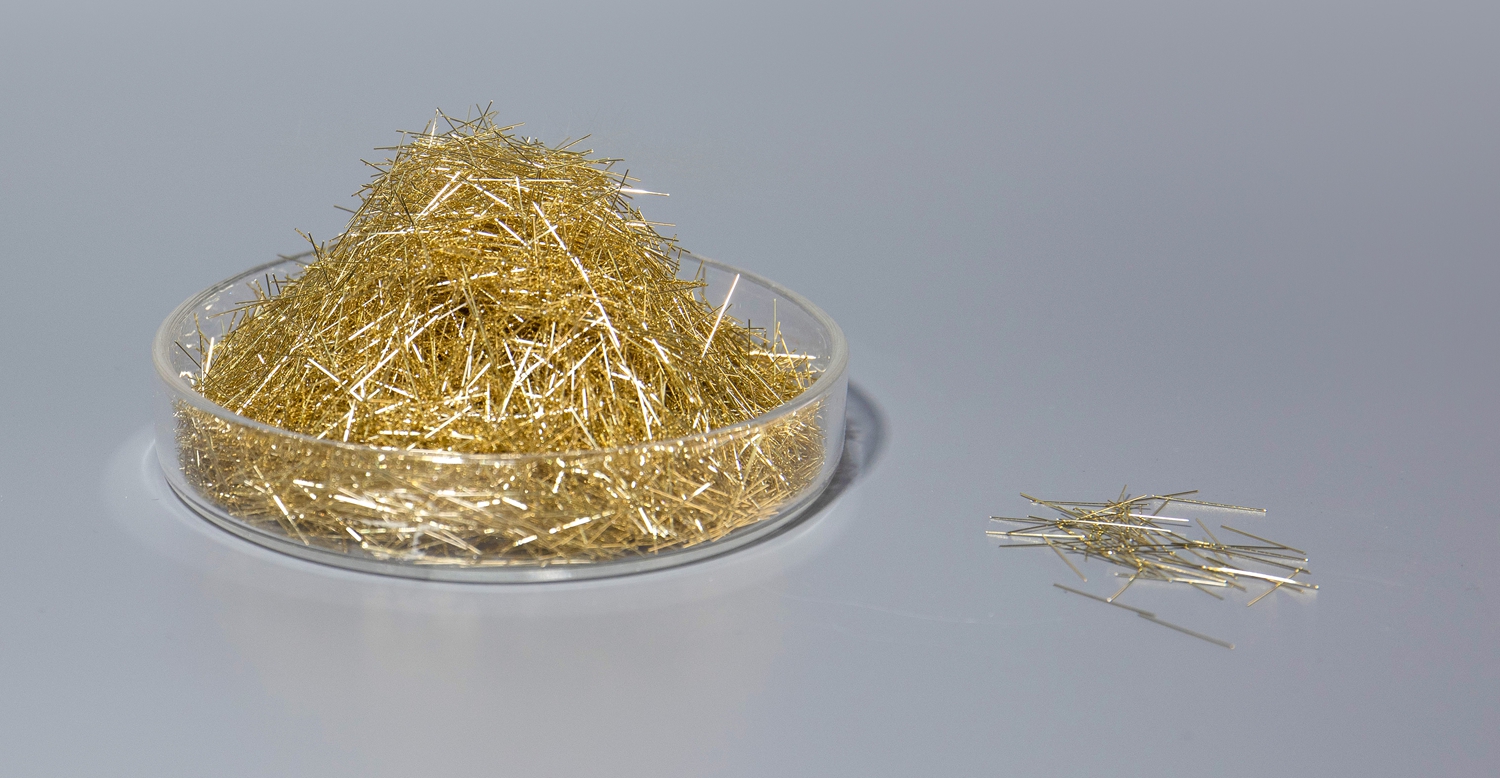
- Fibre reinforcement: Short, fine steel fibres, comprising 2%–5% by volume, are the source of its toughness.
Recommended additives
- Polycarboxylate superplasticiser
- Defoamer
- Copper-Coated Micro Steel Fiber
- Viscosity Modifying Agent
Polycarboxylate superplasticiser specifically designed for UHPC (Ultra-High Performance Concrete) is the ‘essential additive’ that determines whether UHPC can be successfully mixed and applied.
Due to UHPC’s extremely low water-to-binder ratio (typically between 0.14 and 0.18) and the large volume of powdery materials (cement, silica fume, ultra-fine mineral powder, etc.), ordinary Polycarboxylate superplasticiser are simply incapable of liquefying it. Polycarboxylate superplasticiser specifically designed for UHPC must possess the dual core properties of “high water reduction” and “low viscosity”.
Core Technical Characteristics
Unlike Polycarboxylate superplasticiser used in ordinary ready-mixed concrete, those specifically designed for UHPC feature a specially tailored molecular structure:
- Short side chains, high density: By shortening the length of the polyether side chains and increasing their density, a stronger steric hindrance effect is generated, enabling the rapid dispersion of ultra-fine powders even at extremely low water content.
- Low-viscosity design: Conventional water-reducing agents make UHPC as viscous as “maltose”, preventing air bubbles from escaping and requiring high pumping pressure.
- By adjusting the molecular weight distribution, the specialised formulation significantly reduces the yield shear stress of the slurry, giving the viscous mixture a flow characteristic similar to water.
- High adsorption rate: Ensures rapid effectiveness within the first 3–5 minutes of mixing, shortening the lengthy transition time between dry and wet mixing in UHPC.
In UHPC (Ultra-High Performance Concrete), defoamers are a crucial additive. Due to UHPC’s extremely low water-to-cement ratio (typically <0.18) and high powder content, the slurry has a very high viscosity, similar to that of maltose. Bubbles entrained during mixing are extremely difficult to expel; without a defoamer, the mixture would become filled with numerous voids measuring 1–5 mm, leading directly to a collapse in strength.
1. Core Function: Eliminating ‘Harmful Voids’
Physical Aspect: Reduces the surface tension of the slurry, causing the large bubbles generated during mixing to coalesce and burst rapidly.
Performance Aspect:
- Eliminates harmful air bubbles larger than 1 mm, controlling air content within 1%–2% to ensure compressive strength reaches 150 MPa or even 200 MPa.
- Aesthetic Aspect: Resolves issues with a mirror-like finish, eliminating surface ‘pitting’ and deep pits to achieve a high-grade decorative effect.
2. The Specific Characteristics of UHPC Defoamers (Why Do Ordinary Defoamers Fail?)
- Shear resistance: UHPC involves high mixing power and strong shear forces; ordinary defoamers are rapidly sheared and emulsified, rendering them ineffective. It is therefore essential to select a product with strong shear resistance.
- Synergistic viscosity reduction: A high-quality defoamer, whilst breaking bubbles, assists specialised polycarboxylic acid superplasticisers in reducing the yield shear stress of the slurry, making the slurry more ‘smooth and fluid’, which facilitates the escape of air bubbles through the gaps in the steel fibres.
In the UHPC (Ultra-High Performance Concrete) system, Copper-Coated Micro Steel Fibers are not merely reinforcing materials, but the very essence of its “ultra-high performance”. Without steel fibres, UHPC is merely an extremely brittle, high-strength block of stone; with the addition of Copper-Coated Micro Steel Fiber, it transforms into an “artificial steel stone” with exceptional toughness.
The following is an in-depth analysis of the application of Copper-Coated Micro Steel Fiber in UHPC:
Core Function: From ‘Brittleness’ to ‘Ductility’
- Bridging Effect: When micro-cracks appear in the concrete matrix, the steel fibres span the two ends of the crack, acting like countless ‘micro-tie rods’ to hold the matrix together and prevent the crack from propagating.
- Enhanced Tensile Strength: The tensile strength of ordinary concrete is virtually zero; however, when steel fibres are added at a volume content of 2%–5%, the tensile strength of UHPC can reach 7–20 MPa.
- Ductility and Impact Resistance: Upon failure under load, UHPC does not shatter instantly but instead exhibits a ‘crack but not break’ behaviour, significantly enhancing its seismic and blast resistance.
In the complex formulation of UHPC (ultra-high-performance concrete), VMA (viscosity modifier/rheological stabiliser) plays the role of a ‘stabilising force’.
As UHPC contains a large amount of steel fibres, an extremely low cement-to-water ratio and ultra-fine powders, without the regulation provided by VMA, the slurry is highly prone to fluctuating between the two extremes of being extremely dry and extremely thin.
Core Mission: Solving the ‘Balance Dilemma’ of UHPC
- Suspending Steel Fibres (Anti-Sedimentation): The density of steel fibres (approximately 7.8 g/cm³) is far greater than that of the slurry. VMA establishes a microscopic network structure, generating sufficient yield stress to ensure that steel fibres remain uniformly suspended during mixing, transport and pouring, preventing them from settling to the bottom.
- Preventing “settling” and segregation: UHPC utilises extremely high doses of water-reducing agents, which can easily lead to the separation of the paste from the aggregates (settling). VMA increases the cohesive strength of the paste, allowing quartz powder, silica fume and cement paste to tightly encapsulate the fine sand.
- Improving rheology (thixotropy): VMA imparts to UHPC the characteristic of “thick when at rest, thin under stress”. This ensures smooth flow during pouring, whilst allowing the paste to stabilise rapidly once pouring ceases, preventing excessive flow towards lower areas.
- Aiding defoaming: The appropriate viscosity allows small air bubbles to coalesce more easily into larger bubbles and be expelled. If the viscosity is too high (due to no VMA or incorrect dosage), bubbles will become ‘trapped’; if the mixture is too thin, water marks will remain after the bubbles have been expelled.
FAQ
- 1Which type of steel fibre to choose for UHPC
For UHPC (Ultra-High Performance Concrete), the choice of steel fibre directly determines itstensile strength,ductilityandcrack control capability.
Unlike the coarse steel fibres used in ordinary concrete, UHPC must use ultra-fine, high-strength, micro-filament steel fibres. The following are specific recommendations for selection:
1. Core specification parameters (standard configuration)
- Appearance: Straight (Round) is the mainstream choice. As the UHPC matrix is extremely dense, there is no need for ‘hooks’ to create physical interlock as in ordinary concrete; straight fibres distribute more evenly within extremely narrow gaps.
- Diameter: Typically between 0.12 mm and 0.25 mm (as fine as a hair).
- Length: Common lengths are 6 mm, 10 mm and 13 mm.
- Rule of thumb: The length is usually 3–4 times the maximum aggregate size and should not exceed half the thickness of the component.
- Length-to-diameter ratio (L/d): It is recommended to be between 50 and 80. A higher length-to-diameter ratio provides better reinforcement, but increases the likelihood of clumping during mixing.
2. Physical Performance Requirements
- Tensile Strength: Must be > 2000 MPa (high-strength steel wire grade).
- Reason: The UHPC matrix has extremely high strength; if the steel fibres are not sufficiently strong (e.g., standard 1000 MPa grade), they will snap directly under load rather than slip out of the matrix, leading to brittle failure.
- Surface treatment: Copper-coated (Copper Coated) must be selected.
- Purpose: 1. Temporary rust prevention; 2. To enhance chemical lubrication and adhesion between the fibres and the cement paste.
3. Selection strategies for different applications
- Ultra-thin decorative panels / complex openwork components:
- It is recommended to select 6mm – 8mm ultra-short fibres. This facilitates the passage of the mortar through the gaps in complex moulds and reduces the exposure of fibres on the surface.
- Bridge components / load-bearing structures:
- It is recommended to select 13mm fibres, or to use a combination of long and short fibres (e.g. 13mm + 6mm). Long fibres are responsible for bridging macro-cracks, whilst short fibres are responsible for suppressing micro-cracks.
- Extremely high toughness requirements (e.g. blast resistance, impact resistance):
- Consider hooked-end or special-shaped microfibres; however, this places extremely high demands on the mixing process and the viscosity-reducing capability of water-reducing agents.
4. Recommended Dosage Levels
Volume Dosage: Typically 2%–3% (i.e. 157–235 kg of steel fibre per cubic metre of concrete).
Note: When the dosage exceeds 3.5%, it must be combined with extremely high-concentration polycarboxylate superplasticisers and viscosity modifiers; otherwise, severe ‘clumping’ will occur.
- 2Why Must UHPC Be Mixed Using a Vertical-Shaft Planetary Mixer?
Conventional twin-shaft horizontal mixers struggle to process UHPC for the following reasons:
- High Shear Force: UHPC has an extremely low water-to-binder ratio (typically <0.2) and contains large amounts of ultrafine powders such as silica fume, which make it highly prone to agglomeration. The mixing arms of a planetary mixer rotate at high speed while orbiting, creating a “comprehensive, dead-zone-free” shear path that rapidly breaks up agglomerated powders.
- Fluidization Threshold: UHPC starts as a dry powder during the initial mixing phase but suddenly “liquefies” into a fluid at a specific moment. Planetary mixers can precisely detect this load change, ensuring the slurry rapidly achieves a homogeneous state after fluidization.
- Preventing Dead Zones: The vertical shaft design, combined with bottom and side scrapers, prevents expensive steel fibers from settling at the bottom of the vessel or adhering to the walls.
2. Mixing Logic for Steel Fibers
- Timing of Addition: Typically follows the principle of “dry mixing first, then adding water to liquefy, followed by fiber addition”. Steel fibers must be evenly dispersed only after the slurry has fully liquefied and exhibits high flowing properties.
- Dispersion Principle: The complex trajectory of the planetary mixer acts like a “comb” to untangle bundled fibers. If shear force is insufficient, the fibers will become entangled into “fiber balls” due to magnetic or physical interactions, resulting in large voids within the structure and directly causing component failure.
- Mixing Time: The mixing time after adding the fibers must be strictly controlled. If it is too short, dispersion will be uneven; if it is too long (exceeding 3–5 minutes), the copper coating on the fiber surfaces may be damaged, or the slurry may lose its ability to flow due to heat generation.