

Waterproof Mortar
- Home
- Drymix mortar industry
- Drymix mortars
- Waterproof Mortar
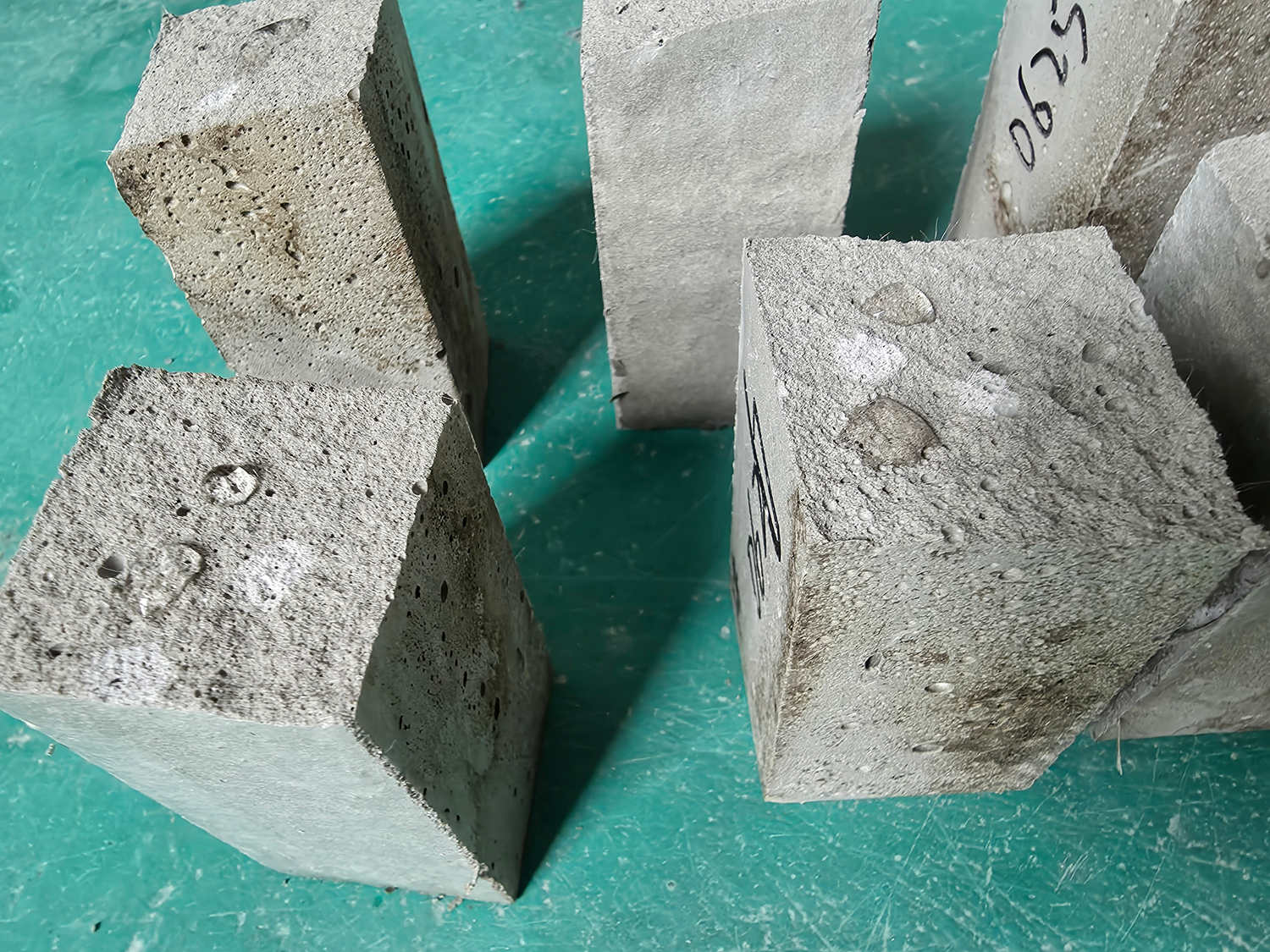
Waterproof mortar is a building material produced by adding polymers, water-repellent agents or other waterproofing additives to cement mortar, thereby reducing porosity and enhancing density through adjustments to the mix ratio. It combines the characteristics of waterproofing, impermeability and strong adhesion, and is primarily used for waterproofing and damp-proofing work in basements, water tanks, external walls, and kitchens and bathrooms.
Waterproof mortar is primarily classified into the following two categories based on its performance and composition:
Polymer-modified cementitious waterproof mortar (rigid waterproofing):
- Composition: Formulated using cement and fine aggregates as the base, with the addition of polymers (such as dispersible latex powder) and additives.
- Characteristics: High strength and excellent durability; can be applied directly onto damp substrates. Suitable for structurally stable areas, such as external basement walls and interior levelling layers.
Flexible waterproofing mortar/compound:
- Composition: Contains a higher proportion of polymers and is typically a two-component system (liquid + powder).
- Characteristics: Possesses a degree of ductility and crack-bridging capability, enabling it to accommodate minor deformations and vibrations in the substrate. Commonly used in areas subject to significant temperature fluctuations or prone to movement, such as roofs or balconies.
Key Performance Characteristics of Waterproof mortar
- Excellent waterproofing performance
- Strong bonding strength
- Micro-flexibility and crack resistance
- Superior durability and safety
- Ease of application
Recommended additives
- Polycarboxylate superplasticizer
- Redispersible polymer powder
- Water-repellent agent
In waterproof mortar, polycarboxylic superplasticizer(PCE) serve not only as water-reducing agents but also as the key means of enhancing impermeability.
Core function: Waterproofing through physical structure
- Significantly reducing the water-to-cement ratio (W/C): By achieving a water-reduction rate of 20%–35%, the water content of the mortar is minimised.The less water added, the fewer and finer the capillary channels left behind after evaporation, thereby blocking water penetration.
- Significantly improved water resistance: Due to the substantial reduction in porosity, the water resistance rating of waterproof mortar can be upgraded from the standard P6 to P10 or even P12 and above.
- Enhanced Density and Strength: A dense structure not only provides waterproofing but also significantly improves tensile bond strength (reaching 1.0–1.5 MPa) and compressive strength.
- Improved Workability: Maintains good flowability and workability even at low water content, making the waterproofing layer easier to level and compact, thereby reducing the risk of leaks caused by construction oversights.
Redispersible polymer Powder (RDP)is a key additive in waterproofing mortars that provides ‘flexible waterproofing’ and ‘bonding strength’.
Key Functions
- Formation of a hydrophobic film (sealing pores):
During the hardening process of the mortar, the Redispersible polymer Powder aggregates within the capillary pores to form a continuous polymer film. This film possesses extremely strong water-repellent properties and effectively blocks the pathways for water penetration.
- Significantly enhances tensile bond strength:
Waterproofing layers are typically thin (3–5 mm) and must adhere firmly to the substrate (concrete or brickwork). Redispersible polymer Powder ensures that the mortar maintains a bond strength of >1.0 MPa even on damp substrates, preventing delamination and peeling of the waterproofing layer.
Providing flexibility and crack resistance:Ordinary cement mortar is highly prone to shrinkage and cracking upon drying. Redispersible polymer Powder reduces the elastic modulus of the mortar, enabling it to absorb minor deformations and vibrations in the substrate, thereby preventing leaks caused by micro-cracks in the structure.
- Enhanced water resistance and weather resistance:
The use of high-performance VAE (vinyl acetate-ethylene) polymer powder ensures that the waterproofing layer retains its strength and does not undergo hydrolysis even in environments subject to prolonged water immersion (such as swimming pools and basements).
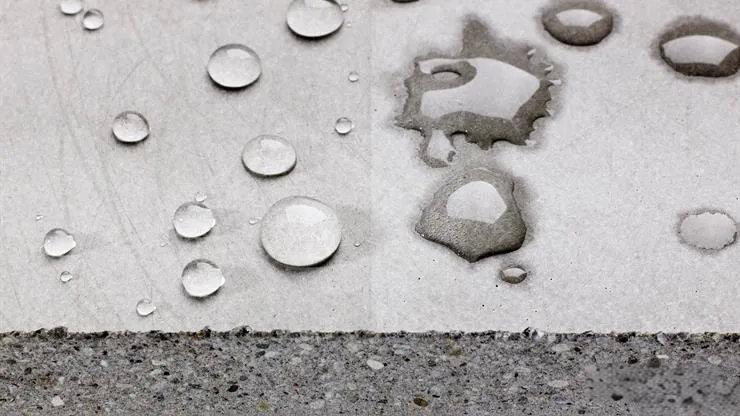
In waterproof mortar, silicone water-repellent agents are currently the most advanced and effective waterproofing additives. Unlike traditional physical filler-based waterproofing methods (such as calcium stearate), they alter the molecular properties of the material’s surface through chemical reactions.
Core Principle: The Lotus Effect
- Chemical Bonding: Once silicone molecules (silane/siloxane) penetrate the mortar or plaster, they undergo a condensation reaction with the hydroxyl groups (-OH) on the substrate’s surface, firmly ‘anchoring’ themselves to the pore walls.
- Altering Surface Energy: It transforms the substrate from hydrophilic (water-attracting) to strongly hydrophobic (water-repelling). When water droplets fall onto the surface, they form beads that roll off, much like on a lotus leaf, and cannot penetrate through the capillaries.

FAQ
- 1Where is waterproof mortar used?
Due to its high resistance to water pressure, strong adhesion and flexibility in application, waterproof mortar provides comprehensive protection in construction projects, ranging from underground structures to rooftops.
Depending on the pressure conditions at the construction site and the requirements of the substrate, its specific applications are as follows:
1. Underground works (areas requiring high water resistance)
This is the core application scenario for waterproof mortar, primarily addressing pressure from the water-facing side:
- Basement floor slabs and side walls: Prevents groundwater penetration, typically serving as the first line of defence for external structural waterproofing or as an internal waterproofing layer.
- Underground car parks and civil defence structures: Applied as a render over concrete surfaces to enhance overall water resistance.
- Lift shafts and sump pits: These areas are subject to prolonged water immersion, requiring the mortar to possess extremely high density and compressive strength.
2. Indoor Kitchens, Bathrooms and Balconies (Core Residential Areas)
Primarily designed to cope with domestic water and surface water accumulation:
- B Bathroom and shower room walls and floorsB : Serves as the waterproofing substrate prior to tiling, capable of withstanding frequent exposure to water.
- B Kitchen floors and pipe penetrationsB : Prevents standing water from seeping through gaps around pipes.
- B Open-plan balconies and terracesB : Resists rainwater runoff and requires a certain degree of weather resistance and crack resistance.
3. External Walls and Finishing Layers (Moisture-proof and Crack-resistant Zone)
Primarily prevents rainwater from penetrating the walls, which could lead to mould or efflorescence indoors:
External Wall Levelling Layer: Before applying external wall tiles or spray-applied stone-effect paint, a layer of waterproof mortar is applied to block rainwater from penetrating inwards.
Window sills, eaves, and internal/external corners: These areas, which are prone to leaks, are reinforced with waterproof mortar to ensure a watertight finish.
- 2What additives are used in waterproof mortar?
When manufacturing high-performance waterproof mortar, the choice of additives directly determines its water resistance, bond strength and durability.
Below is a list of key additives and their roles in the formulation:
1. Core Additives
Redispersible Polymer Powder (RDP):
Function: Forms a polymer film to seal capillaries, providing flexibility and crack resistance, ensuring exceptional tensile bond strength on substrates (such as concrete and brick walls).
Recommendation: Select VAE-type polymer powder with good alkali and water resistance.
Polycarboxylic superplasticizer (PCE):
- Function: Significantly reduces the water-to-binder ratio. The less water used, the higher the density of the hardened mortar, thereby physically blocking water penetration.
- Form: Dry-mix mortars must use powdered polycarboxylic superplasticizer.
2. Workability Modifiers
- Cellulose Ether (HPMC/HEMC):
- Function: Provides high water retention. Prevents the substrate from absorbing water too rapidly, which could lead to incomplete cement hydration, thereby avoiding powdering and cracking. It also provides consistency to prevent the mortar from sagging or running during application.
- Viscosity: Typically, a viscosity of 40,000–50,000 is selected to ensure good workability during application.
Defoamer:
- Function: Extremely critical! Latex powder and cellulose ether introduce a large number of air bubbles, which act as pathways for water leakage. The defoamer eliminates large air bubbles, ensuring that the interior of the mortar is solid and dense.
3. Functional Waterproofing Enhancers
- Silane/Siloxane Hydrophobic Agent:
- Function: Provides a ‘lotus effect’, giving the mortar the ability to repel water, significantly reducing capillary water absorption whilst maintaining the mortar’s breathability (ability to ‘breathe’).
- Expansive Agent / Shrinkage Compensating Agent:
- Function: Offsets the drying shrinkage of the cement paste during hardening, preventing micro-cracks that lead to water ingress.
4. Auxiliary Fillers
Silica Fume:
Function: Ultra-fine active particles that fill the voids in the cement matrix, triggering a secondary hydration reaction, thereby significantly enhancing water resistance and strength.


